

What Is a Taxi Cab Service and How Does It Work?

A taxi cab service is a professional, on-demand transportation option that connects passengers with licensed drivers — available by phone, app, or street hail, 24 hours a day.
Book Your Transfer
Fill in your details and we'll confirm your booking on WhatsApp.
Quick answer for travelers:
| What you need | What to expect |
|---|---|
| Immediate ride | Hail a cab or tap “Ride Now” in an app |
| Airport transfer | Book in advance, flight tracking often included |
| Group or corporate travel | Flat rates, monthly billing available |
| Accessible transport | Wheelchair-accessible vehicles at most major services |
| Safe, vetted driver | Licensed, background-checked, insured operators |
Getting from A to B should be simple. But anyone who has waited 45 minutes for a ride that never showed — or climbed into an unfamiliar city — knows that not all taxi services are created equal.
The global taxi market was valued at around $140 billion in 2023 and is on track to hit $250 billion by 2030, according to industry analysis. Across the U.S. alone, taxi services handle an estimated 1.5 billion rides per year, with airport transfers making up roughly one in four of those trips. Whether you need a quick local ride or a punctual transfer to the airport, knowing how to choose a reliable service makes all the difference.
I’m hoy, a transportation researcher with years of experience evaluating taxi cab service options across local and international markets. In this guide, I’ll walk you through everything you need to make a confident, safe booking decision.

Understanding Different Types of Taxi Cab Service
When you think of a taxi cab service, you might just picture a car with a “Taxi” sign on top. However, the industry has evolved into a diverse ecosystem of specialized vehicles and services designed to meet specific passenger needs. In regions like Arusha and Moshi, understanding these distinctions ensures you get the right ride for your luggage, your group size, and your budget.
Local Fleets and Private Hires
The backbone of urban transport is the local taxi fleet. These vehicles are generally available 24/7, 365 days a year. A private hire taxi differs from a standard street-hail cab because it must be pre-booked through a central office or app. This provides an extra layer of security, as the dispatch office keeps a record of the driver, the vehicle, and the passenger.
Airport and Hotel Transfers
This is perhaps the most critical type of taxi cab service. These are dedicated routes between transit hubs and accommodations. Unlike a standard city hop, these services often include perks like luggage assistance and fixed pricing to avoid the stress of a ticking meter while stuck in traffic.
Corporate Accounts and Business Travel
For the professional traveler, many companies offer corporate accounts. These allow businesses to set up monthly billing, which is used by roughly 40% of business clients in major metropolitan areas. This eliminates the need for employees to carry cash or manually file individual receipts for every trip.
Specialized and Accessible Transport
Inclusivity is a major focus for modern taxi providers. Specialized services include:
- Wheelchair Accessibility: Vehicles equipped with ramps or lifts (often referred to as “Ramp Taxis” in some regions) to accommodate passengers with mobility devices.
- Non-Emergency Medical Transport: Patient and professional drivers who assist passengers traveling to and from doctor appointments or hospitals.
- Large Group Vehicles: While a standard sedan is great for solo travelers, fleets often include minivans (seating up to 6–11 passengers) or even larger coasters for groups of up to 25 people.
Booking and Payment Options for Modern Travelers
The days of standing on a rainy corner waving your arm are fading. Today, booking a taxi cab service is about convenience and transparency. Whether you are in the heart of Arusha or the outskirts of Moshi, you have multiple ways to secure a ride.
How to Book Your Ride
Modern travelers generally choose from three primary booking methods:
- Mobile Apps: The most popular choice for the tech-savvy. You can see your driver’s location in real-time, get an upfront price, and receive vehicle details before the car arrives.
- Phone Reservations: Still a gold standard for reliability. Speaking to a live operator allows you to explain special needs, such as extra luggage for a Kilimanjaro trek or a specific pickup landmark.
- Online Booking: Ideal for planning ahead. Many travelers book their airport transfers days or weeks in advance via a website to ensure peace of mind upon landing.
Comparing Booking Methods
| Feature | Mobile App | Phone Call | Online Booking |
|---|---|---|---|
| Speed | Instant | 1–3 minutes | Variable |
| Pre-Booking | Possible | Excellent | Best for long-term |
| Driver Tracking | Real-time GPS | Via operator | Email confirmation |
| Special Requests | Limited to icons | Detailed conversation | Notes section |
Payment Flexibility
A reliable taxi cab service should never leave you scrambling for exact change. Modern payment options include:
- Cashless Payments: Paying via the app or through secure mobile payment platforms.
- Upfront Pricing: Knowing the final fare before you even open the car door. This prevents “sticker shock” at the end of the journey.
- Metered Fares: For local trips, a calibrated meter ensures you pay a fair, regulated rate based on distance and time.
- Monthly Billing: As mentioned, this is a favorite for corporate clients and frequent travelers who prefer to settle their accounts at the end of the month.
Safety Standards and Driver Qualifications
Your safety is the most important part of any journey. When you choose a professional taxi cab service, you aren’t just paying for a ride; you’re paying for a vetted environment.
What Makes a Driver “Professional”?
In unregulated ride-sharing, anyone with a car can theoretically pick up passengers. However, a reputable taxi company maintains strict standards:
- Background Checks: Every driver should undergo a rigorous screening process to ensure they have a clean criminal record and a solid driving history.
- Driver Training: Beyond just knowing how to drive, professional drivers are trained in local route knowledge, customer service, and safety protocols. In Tanzania, having an English-speaking driver who is familiar with the nuances of local traffic and regional travel is a massive advantage for international visitors.
- Vehicle Inspections: Vehicles should undergo daily safety checks and routine audits. This ensures that brakes, tires, and seatbelts are always in top condition.
Insurance and Licensing
Licensed operators carry commercial liability insurance. This is a critical distinction—many private or “pirate” taxis operate without the proper insurance, leaving the passenger vulnerable in the event of an accident. Always look for company branding and official taxi licenses to ensure you are protected.
Specialized Taxi Cab Service for Airport and Hotel Transfers
Airport transfers account for about 25% of all taxi rides globally, and for good reason. Navigating a new city after a long flight is exhausting. A professional airport pickup and drop off service removes the guesswork.
The Professional Difference
When you book a dedicated transfer, you get more than just a car:
- Flight Tracking: We monitor your flight status in real-time. If your plane is delayed, your driver will automatically adjust the pickup time—no extra charges for the wait.
- Meet and Greet: Your driver meets you at the arrivals hall with a sign, helps with your luggage, and leads you directly to the vehicle.
- No Surge Pricing: Unlike some apps that double or triple prices during busy times at the airport, a professional taxi service offers flat, transparent rates.
- Hotel to Airport Logistics: When it’s time to head home, transportation from hotel to airport ensures you arrive with plenty of time for check-in, without the stress of wondering if a car will show up at 4:00 AM.
International Perspectives: Taxi Cab Service in Tanzania vs. USA
While the core concept of a taxi cab service is the same worldwide, the execution varies by region. In the United States, the industry is heavily shaped by app integration and large corporate fleets. In Tanzania—specifically in the Arusha and Moshi regions—the focus is on local expertise and personal safety.
Navigating Transport in East Africa
For travelers visiting Kilimanjaro or the northern safari circuit, transport is a key part of the experience. A private airport transfer in this region is often the safest and most efficient way to travel.
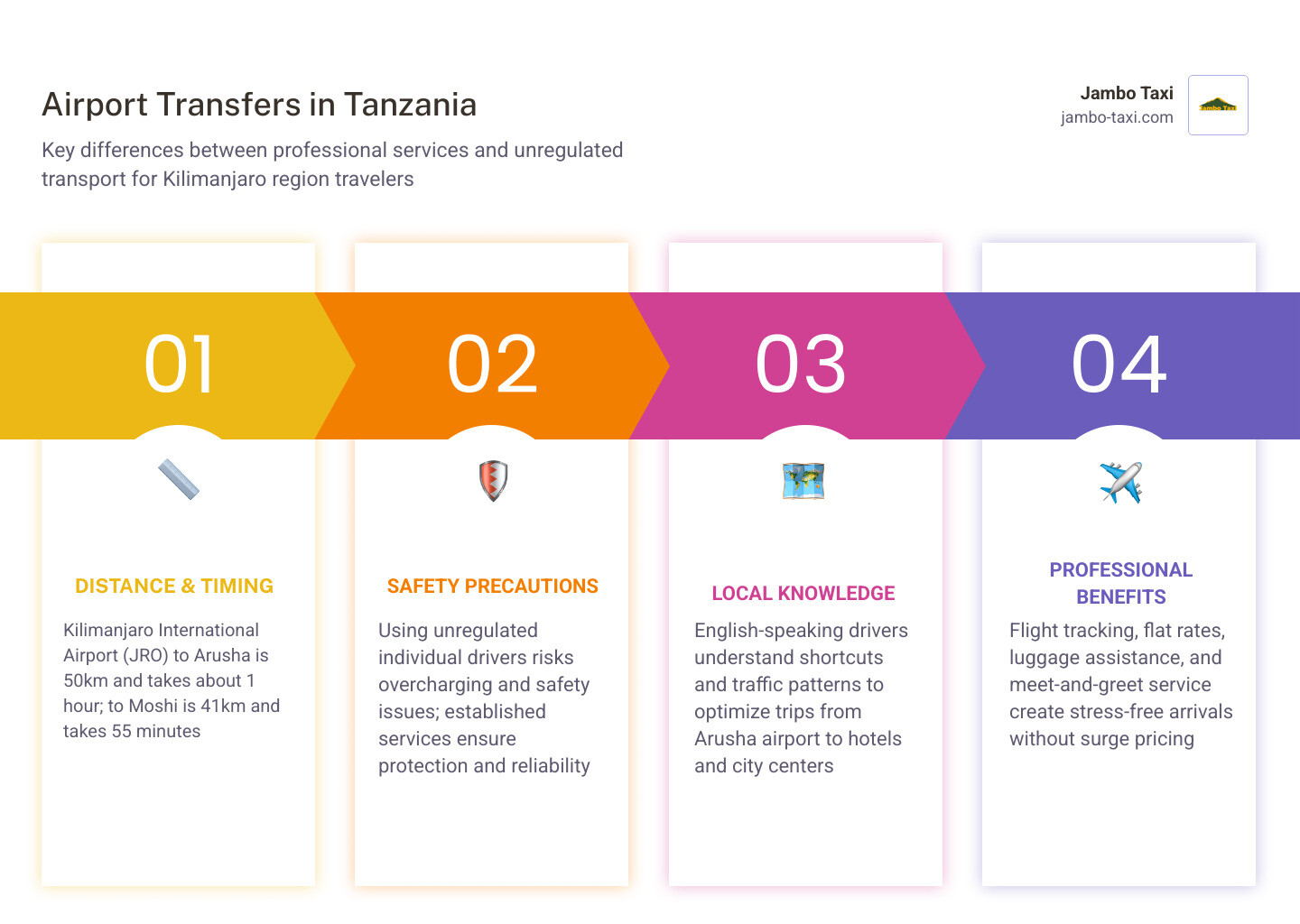
- Distance and Timing: The distance from Kilimanjaro International Airport (JRO) to Arusha is about 50 kilometers (roughly a 1-hour drive), while the trip to Moshi is about 41 kilometers (roughly 55 minutes).
- Safety Precautions: Using unregulated individual drivers can be risky. We always recommend booking through an established service to avoid potential issues with overcharging or safety.
- Local Knowledge: Arusha airport transfers and city rides benefit immensely from drivers who speak English and understand the local shortcuts to avoid traffic congestion.
Frequently Asked Questions about Taxi Services
How are taxi rates typically calculated?
Taxi rates generally consist of a few different components. Most services use a “flag drop” (a base rate just for starting the trip) followed by a mileage fee. In some cases, there is also a wait time charge—typically around $0.50 per minute or $30.00 per hour—if the driver is asked to wait while you run an errand. For longer trips, such as Arusha airport transfers, flat rates are more common and often more economical.
Can I book a taxi for a future date?
Absolutely. In fact, for early morning flights or important business meetings, we highly recommend it. “Ride Later” or advance reservation options allow you to schedule your pickup days in advance. This ensures a driver is assigned to your route and will be at your door punctually.
What should I look for in a reliable taxi company?
Consistency is key. Look for:
- Branding: The vehicle should be clearly marked with the company logo and contact information.
- Professionalism: Drivers should be polite, assist with luggage, and drive safely.
- Positive Reviews: Check what other travelers are saying about their punctuality and vehicle cleanliness.
- Insurance: Ensure the company is fully licensed and insured for passenger transport.
Conclusion
The taxi cab service industry is currently undergoing a massive transformation. From the integration of advanced booking apps to the future trend of electric vehicles (EVs) reducing the carbon footprint of city travel, the goal remains the same: getting you to your destination safely and comfortably.
At Jambo Taxi, we pride ourselves on being the premier choice for travelers in Moshi and Arusha. Whether you are arriving at Kilimanjaro Airport for the adventure of a lifetime or simply need a reliable ride to your hotel, our focus is on punctuality, safety, and your total satisfaction.
Ready for a stress-free journey? Book your ride with Jambo Taxi today and experience the gold standard of Tanzanian transportation.