

What Is Mto wa Mbu? Tanzania’s Cultural Gateway Explained
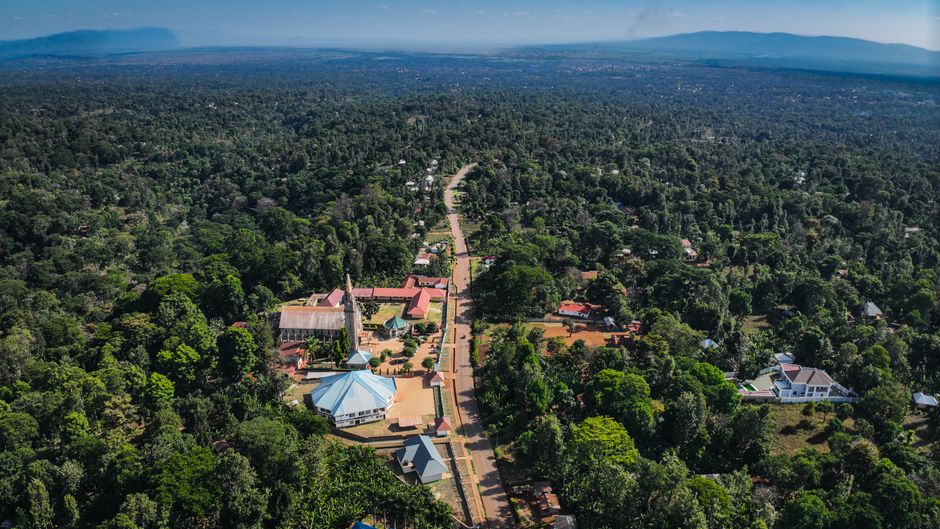
Mto wa Mbu is a vibrant village in northern Tanzania, sitting at the edge of the Great Rift Valley — and it’s one of the most culturally unique stops on any Tanzania safari itinerary.
Book Your Transfer
Fill in your details and we'll confirm your booking on WhatsApp.
Quick facts:
| Feature | Detail |
|---|---|
| Location | Monduli District, Arusha Region, northern Tanzania |
| Distance from Arusha | ~120 km, about 2 hours by road |
| Name meaning | “River of Mosquitoes” (Swahili) |
| Population | Around 18,000–40,000 people |
| Cultural diversity | Representatives from all 120 Tanzanian tribes |
| Nearby parks | Lake Manyara, Tarangire, Ngorongoro Crater, Serengeti |
| Best time to visit | Dry season, June to October |
This small but remarkable town sits between Lake Manyara and the Ngorongoro Crater, making it a natural stopover for travelers exploring Tanzania’s northern safari circuit. It is famous for two things above all else: its extraordinary cultural diversity and its lush banana plantations.
Whether you’re passing through on the way to a game drive or planning a dedicated cultural half-day, Mto wa Mbu offers something genuinely different — a living example of over 120 Tanzanian tribes sharing one community, peacefully and productively.
At Jambo Taxi, we have spent years helping travelers navigate northern Tanzania — including organizing reliable transfers through Mto wa Mbu for safari-goers heading to Lake Manyara and beyond. In this guide, we’ll share everything you need to know to make the most of your time in Mto wa Mbu.
Discovering Mto wa Mbu: Geography, Culture, and History

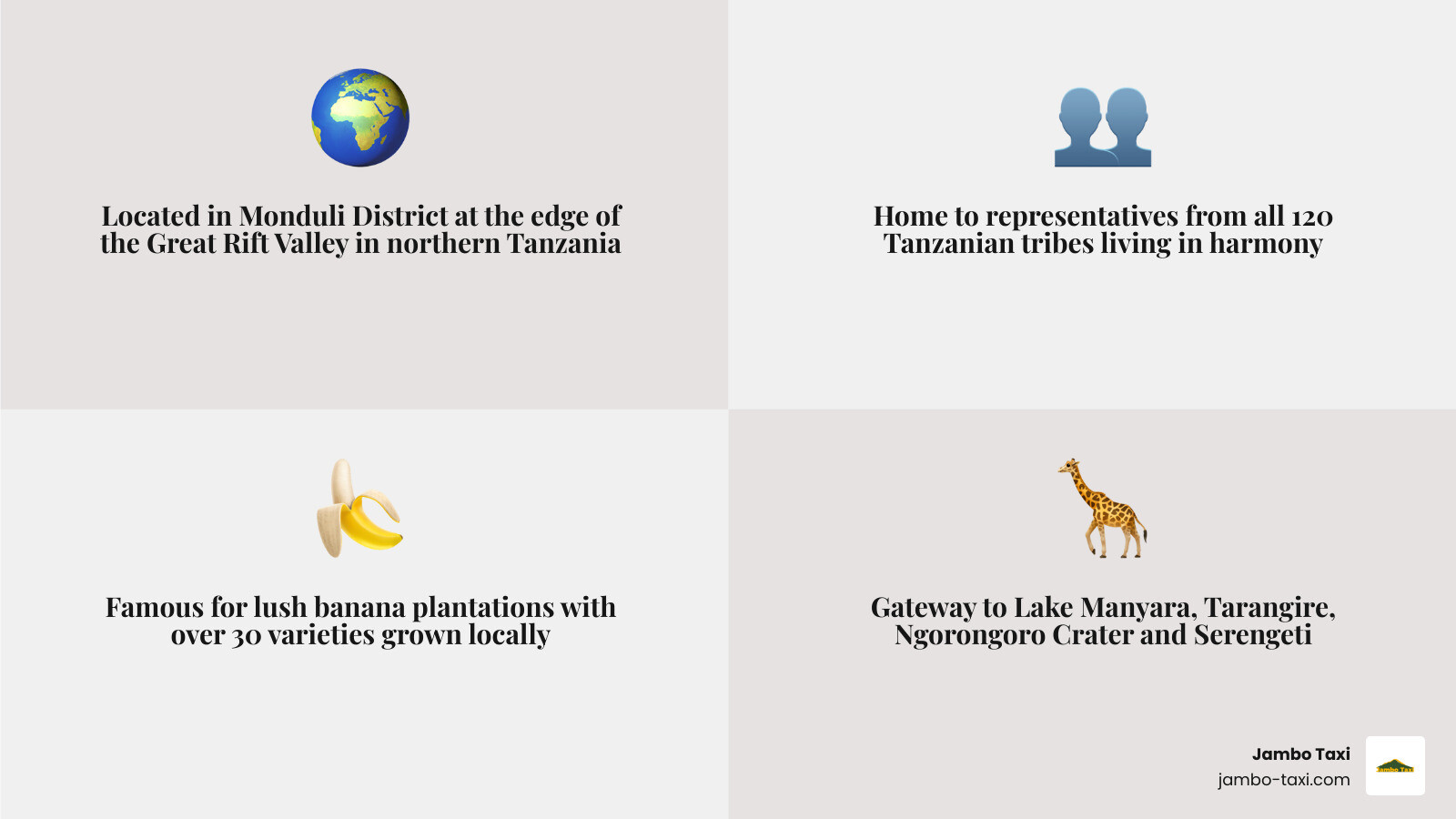
Geographically, Mto wa Mbu occupies an incredibly strategic position. Nestled at the base of the dramatic Great Rift Valley escarpment within the Monduli district of the Arusha Region, the town acts as a physical and ecological bridge. The surrounding landscape transitions rapidly from dry, rugged valley walls to a lush, green oasis fed by local rivers, eventually leading down to the shallow, alkaline waters of Lake Manyara.
According to historical census data, the ward had a population of 11,405 in 2012, but today the broader village community has grown to home between 18,000 and 40,000 people. Covering an expansive area of 3,600 square kilometers (1,400 sq mi), about half of this land—1,800 square kilometers—is actively cultivated.
But what truly sets this town apart is its demographic makeup. It is widely considered one of the only places in Tanzania where you can find representatives from all 120 of the country’s distinct tribes living side-by-side in complete harmony.
If you are curious about how this remarkable cultural melting pot came to be, you can dive deeper into the town’s background in this comprehensive Mto wa Mbu Guide.
The name Mto wa Mbu translates literally from Swahili as “River of Mosquitoes.” While the town is indeed blessed with permanent water sources that keep the region beautifully green year-round, travelers will be pleased to know that modern vector-control efforts and the dry valley breezes mean you won’t find nearly as many mosquitoes here today as the historical name implies!
The Cultural Diversity of Mto wa Mbu
The tribal harmony in Mto wa Mbu is nothing short of legendary. In most parts of rural Tanzania, villages are dominated by one or two local tribes. Here, however, historical migration patterns, trading opportunities, and fertile, irrigated soils drew families from every corner of the country.
Instead of clashing, these diverse groups created a cooperative community where they playfully tease each other about their differing customs while actively sharing resources. If a dispute ever arises, tradition dictates that community members sit down with a tribal elder over a shared calabash of local brew to resolve the issue peacefully.
Among the many groups, you will easily spot the iconic Maasai in their bright red shúkàs trading at the markets, the agricultural Chagga managing local businesses, and the Makonde people running highly skilled artisan workshops.
| Tribe | Primary Tradition / Craft in Town | Cultural Contribution |
|---|---|---|
| Maasai | Pastoralism, beadwork, and traditional medicine | Running the daily Maasai market and hosting cultural boma visits. |
| Chagga | Agriculture, banana farming, and brewing | Perfecting the art of mbege (traditional banana and millet beer). |
| Makonde | Master woodcarving | Creating intricate ebony sculptures and teaching visitors carving techniques. |
| Rangi & Sandawe | Papyrus weaving and traditional hunting crafts | Collecting lakeside papyrus for mats and demonstrating traditional archery. |
One of the highlights of any cultural visit is trying mbege, the traditional beer brewed from fermented bananas and millet. It is traditionally served in a single, large communal cup passed around the group as a symbol of unity and trust.
Local Economy and Agriculture
Thanks to an abundance of water flowing down from the Rift Valley highlands, Mto wa Mbu is an agricultural powerhouse. While much of the surrounding Arusha region can experience dry spells, this town remains a vibrant green oasis.
The local economy is heavily anchored by its massive banana plantations, which cover roughly three-quarters of the cultivated village land. The region famously grows over 30 different varieties of bananas! These range from the common sweet yellow bananas to giant cooking plantains, and even the rare red bananas, which take a full year to mature (compared to nine months for green varieties) and boast a sweet, berry-like flavor.
This agricultural success is made possible by a sophisticated, historic irrigation system. In the 1980s, the International Labour Organization (ILO) assisted the village with a flood control and canal-building program. Today, a network of intakes, aqueducts, and channels ensures that river water is distributed to all farms every two weeks, meaning local crops do not rely solely on seasonal rainfall.
Beyond bananas, you will find thriving rice paddies, colorful flower fields, and sunflower plantations. Visitors can even stop by local oil presses, like the one run by the famous local elder Mzee Filipo, to see how sunflower seeds are transformed into rich cooking oil.
Top Activities and Gateway Adventures

Because of its enviable location, Mto wa Mbu has evolved into a premier hub for community-based tourism. When you participate in a tour here, you aren’t just sightseeing; you are directly contributing to the local community.
Through organizations like the Mto wa Mbu Cultural Tourism enterprise, a portion of all tour fees is funneled directly into a Village Development Fund. This fund has successfully built school sanitation facilities, improved clean water access, and supported local orphanages. The enterprise employs over 470 local residents and benefits more than 2,300 community members, providing a sustainable alternative to urban migration.
Additionally, the town serves as the ultimate gateway to Tanzania’s world-famous northern parks. From the town center, you are just minutes from Lake Manyara National Park, and a short drive from Tarangire National Park, the Ngorongoro Conservation Area, and the legendary Serengeti.
Popular Activities in Mto wa Mbu
If you are planning to spend a few hours or a full day in town, we highly recommend trying some of these incredibly immersive activities:
- Guided Village Walk: Spend 2 to 3 hours wandering through banana plantations, visiting local schools, exploring bustling milling machines, and stopping by a Makonde woodcarving workshop where you can try your hand at carving ebony.
- Two-Wheel Bike Tour: Rent a bicycle in town and pedal along flat, dusty tracks through the rice fields and banana groves all the way to the scenic, wildlife-rich shores of Lake Manyara.
- Tuk-Tuk Ride: For a fun and breezy way to get around, hop into a colorful three-wheeled tuk-tuk to zip between local markets and artisan shops.
- Climbing Balaa Hill: If you fancy a hike, take a 3-to-6-hour trek up “the hill of misfortune” (as its Swahili name translates). Your reward at the summit is a breathtaking panoramic view of the Rift Valley and Lake Manyara.
- Maasai Boma Visit: Spend time at an authentic Maasai settlement on the outskirts of town to learn about their pastoral lifestyle, watch traditional jumping dances, and browse handmade beadwork.
For travelers landing at the international airport and heading straight for the wild, arranging a direct transfer from Kilimanjaro Airport to Lake Manyara is the easiest way to combine your safari with a stop in Mto wa Mbu.
Practical Travel Information for Visitors
To make your journey to Mto wa Mbu as smooth as possible, here is some essential practical advice:
- Best Time to Visit: The absolute best time to visit is during the dry season, which runs from June to October. The weather is pleasant, roads are clear, and wildlife viewing in the adjacent national parks is at its peak. However, the lush “green seasons” (November–December and March–May) offer beautiful, quiet landscapes, though you should prepare for occasional heavy rains.
- Getting There from Arusha: The town is located approximately 120 km (74 miles) to 130 km from Arusha. Thanks to a well-maintained, fully tarmacked road, the drive takes a smooth 2 hours.
- Getting There from Moshi: If you are starting your journey further east in Moshi, the distance is roughly 160 km, which translates to a scenic 3-to-4-hour drive.
- Local Tips: Always ask for permission before taking photos of local residents or their homes. When exploring the markets, polite bargaining is expected, but a few extra shillings make a massive difference to local farming families.
If you are planning to combine your cultural excursion with a trip to the crater highlands, booking a reliable transfer from Kilimanjaro Airport to Ngorongoro will allow you to stop off at Mto wa Mbu along the way without any logistical stress.
Frequently Asked Questions about Mto wa Mbu
What does the name Mto wa Mbu mean?
The name is Swahili for “River of Mosquitoes.” It earned this name due to the permanent, fresh water sources flowing from the Rift Valley escarpment, which historically created marshy areas. Despite the name, modern drainage and environmental management mean visitors will not find an overwhelming number of mosquitoes today.
How far is Mto wa Mbu from Arusha?
It is approximately 120 km (74 miles) from Arusha town. The route is entirely paved with smooth tarmac, making for a highly comfortable 2-hour drive.
Is Mto wa Mbu safe for family travelers?
Yes, absolutely! The town is incredibly welcoming, and the local guides are fantastic with children. Family-friendly activities like taking a tuk-tuk ride, learning to carve wood, or biking through flat banana plantations make it a highlight for travelers of all ages.
Conclusion
Whether you are looking to taste delicious red bananas, try your hand at Makonde woodcarving, or simply stretch your legs between game drives, Mto wa Mbu offers an unmatched window into the warm, diverse heart of Tanzania.
At Jambo Taxi, we have been providing safe, punctual, and reliable airport transfers, hotel pickups, and custom day trips in Moshi and Arusha since 2025. We know the roads of northern Tanzania inside and out, and we love sharing our beautiful country with a friendly, local touch.
If you are ready to book your next Tanzanian adventure, explore our popular Jambo Taxi Day Trips and let us handle all your transportation needs!